
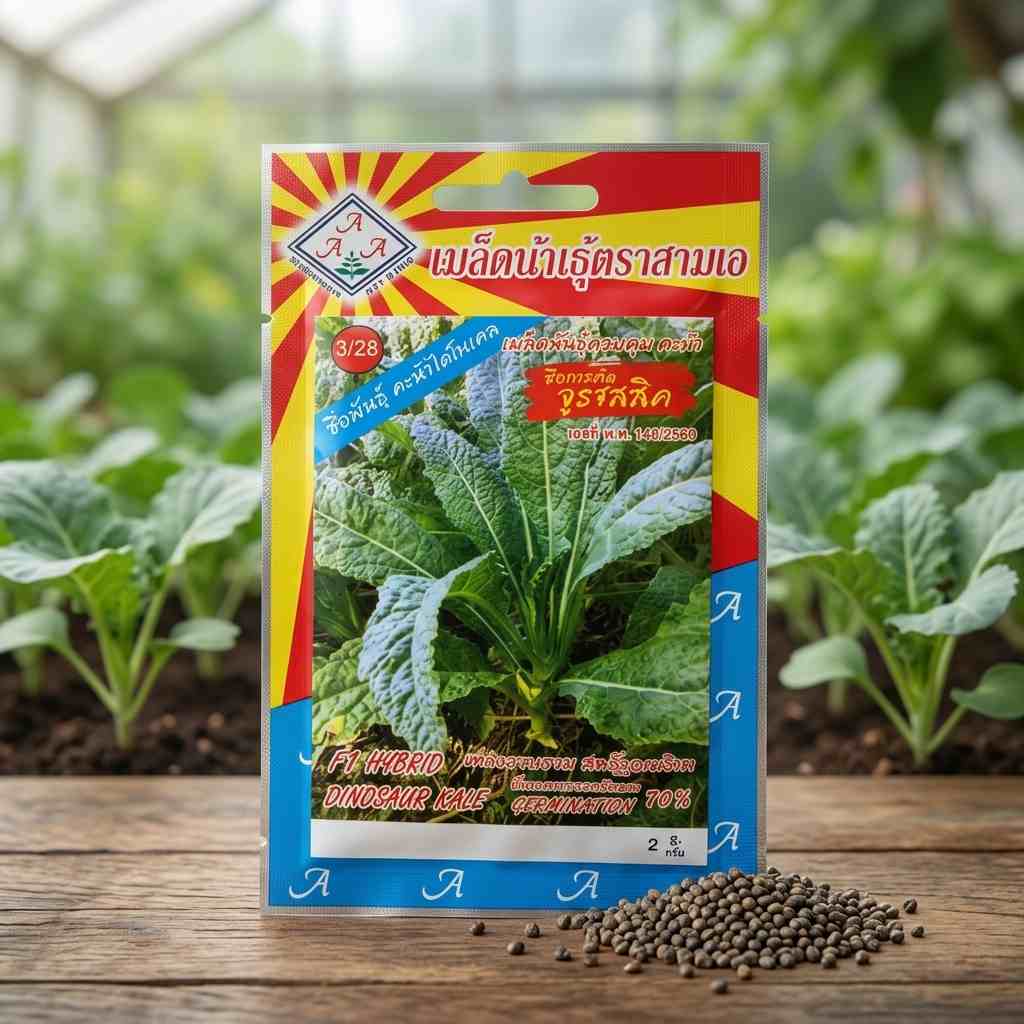
Dinosaur Kale – 190 seeds – AAA – Thai
Original price was: ৳ 280.00.৳ 160.00Current price is: ৳ 160.00.
2 in stock (can be backordered)
Description
Dinosaur Kale
Price: 160 Taka per packet (sale price)
Quantity: 02 gram seeds (approx. 190 seeds)
Brand: AAA (Chua Yong Seed Co., Ltd)
Origin: Thailand
Germination Rate (approx.): 70%
Physical Purity (Min): 98%
Genetic Purity (Min): 98%
🌱 Germination Temperature
-
Ideal soil temperature: 18°C to 24°C (65–75°F) for fastest germination.
-
Seeds can still germinate at cooler temps (down to ~7–10°C), but slower.
⏱️ Germination Time
-
Typically 5–10 days under optimum conditions.
📏. Plant Size & Spacing
-
Plant height: ~60–90 cm (24–36″).
-
Plant width/spread: ~30–45 cm (12–18″).
-
Seed sowing depth: about 6–12 mm (¼–½″).
-
Plant spacing: ~18″ (45 cm) between plants.
-
Row spacing: ~18–24″ (45–60 cm).
🧱 Physical Support
No trellis/support needed — kale is leafy and upright on its own. If windy, plant where sheltered. (General brassica growth habit.)
🌿 Seed to Harvest Time
-
Leaves ready for harvest in 60–70+ days after sowing.
🌸 Seed to Bloom Time
-
Flowering generally occurs in the second year (biennial) once plants experience cold (if allowed to overwinter).
🪴 Pot/Bed Size
-
Container: ≥ 12–16″ (30–40 cm) diameter & depth per plant.
-
If multiple plants: container width ≈ 24″ with plants 18″ apart.
(Based on spacing and root space needed for brassicas.)
🌾 Soil Type & pH
-
Best in well-draining, fertile loamy soil rich in organic matter.
-
pH 6.0–7.0 (slightly acidic to neutral).
☀️ Sunlight
-
6–8 hours full sun/day for best growth.
-
For germination: seeds can sprout covered lightly and don’t require light to germinate.
💧 Watering
-
Keep soil consistently moist but not soggy; watering deeply ~1–1.5″ per week (≈ 2.5–3.5 L/m² per week).
-
Water intervals: about every 2–3 days in warm weather; allow top soil to begin drying.
💪 Essential Nutrients
Kale is a heavy feeder, especially:
-
Nitrogen (N) – for leafy growth
-
Phosphorus (P) – root development
-
Potassium (K) – stress resistance
-
Micronutrients: Ca, Mg, S, Fe, Zn
(Exact % varies by soil and fertilizer.)
Organic sources often used:
-
Tricho-compost/Vermicompost/Cow-dung compost — general NPK and organic matter
-
Horn meal — slow-released N
-
Bone meal — phosphorus
-
Neem cake — micronutrients and pest benefits
-
Epsom salt — magnesium & sulfur
(Percentage content varies by product brand.)
🧑🌾 Organic Fertilizer for Container
Approximate for one 12–16″ pot:
-
Vermicompost: 200–300 g
-
Cow-dung compost: 300 g
-
Bone meal: 40–60 g
-
Horn meal: 30–40 g
-
Neem cake powder: 25–40 g
-
Epsom salt: 10–15 g (optional, magnesium booster)
Mix thoroughly into the potting mix before planting seedlings. Re-apply compost top dressing every 6–8 weeks during growth.
Note: These amounts are guidelines — soil test recommended for precision.
⚗️ Chemical Fertilizer
Balanced NPK (e.g., 10-10-10) at ≈ 15–20 g per plant mixed at planting; side-dress with similar amount mid-season.
🪴 Ideal Potting Mix (Bangladesh rooftop)
From your list, a balanced mix:
-
Loamy soil: 30%
-
Vermicompost: 20%
-
Cow-dung compost: 15%
-
Tricho-compost: 10%
-
Coconut coir dust: 10%
-
Bone meal: 5%
-
Horn meal: 3%
-
Neem cake powder: 5%
-
Oyster shell powder: 2% (calcium)
-
Epsom salt: <1% (Mg/S)
(Sand/jhama/cinder not recommended for leafy brassicas.)
🌻 Companion Plants
Good with:
-
Onions, garlic (pest deterrence)
-
Bush beans (nitrogen fixation)
-
Herbs (dill, rosemary — beneficial insects)
Avoid direct neighbors: broccoli & other brassicas to reduce disease pressure.
🍃 Taste Ratings
-
Leaf taste: ~8/10 (savory, slightly sweet with mild bitterness)
-
Fruit: Not applicable (leaf vegetable).
🐜 Pests & Organic/Chemical Control
Common pests:
-
Aphids: insecticidal soap (organic) / neem oil; Imidacloprid (chemical)
-
Cabbage worms: hand-pick / Bt (biological); Spinosad (organic)
-
Flea beetles: row covers / neem; Carbaryl (chemical)
🦠 Diseases
-
Downy mildew, powdery mildew: improve airflow, remove affected leaves; Copper fungicide (organic/chemical).
-
Root rot: avoid waterlogging.
🟢 Harvest Indicators
-
Leaves ~8–12 inches/20–30 cm long
-
Dark, firm, healthy leaves — start with lower leaves.
👨👩👧 Yield Estimates
-
For a family of 4, ~6–8 plants spaced properly can provide continuous leaf harvest. Rough estimate ~ 3–6 kg/season from a small bed.
-
Yield per square foot: ~0.5–1 kg (leaf vegetables vary widely).
🕐 Life Span
Kale is biennial but grown as annual for leaves; may persist into 2nd year in mild climate.
🥬 Nutritional Values
Per 100 g (approximate):
-
Calories: ~35
-
Protein: ~3 g
-
Vitamin A, C, K: very high
-
Calcium, iron, fiber: significant amounts
❤️ Health Benefits
-
High in antioxidants
-
Supports eye health (vitamin A)
-
Good for bone health (vitamin K & Ca)
-
Supports immune health (vitamin C)
-
Helps digestion & weight management
🍽️ Recipes
Bangladeshi:
-
Kale sautéed with garlic & spices
-
Kale dal stir
Other:
-
Kale pesto pasta
-
Kale chips / smoothies
🌦️ Best Planting Month (Bangladesh)
In Bangladesh (hot humid climate), best germination Oct–Dec (cooler months) and early spring (Feb–Mar) to avoid heat-induced bitterness. (General brassica timing — not specific local study; weather patterns suggest cool season is best.)
🌱 Seeds per Gram
Kale seeds are small — ~300–400 seeds/gram (gardening seed directories estimate based on seed size typical of kale). Exact varies with seed source.
🔄 Best Propagation
Most common and successful: seed sowing.
❄️ Leaf Storage
-
Fresh: Refrigerator ~1 week
-
Blanched & frozen: 6–12 months
-
Drying: ~1–2 months (loss of some nutrients)
🌟 Specialties
-
Exceptionally nutritious leafy green
-
Cold tolerant and extends harvest
-
Cut-and-come-again harvest
💬 Quotes
-
“Like prehistoric forests in a garden — ancient form feeds modern health.”
-
“In every wrinkle of its leaf lies a treasure of nutrition.”
🧠 Fun Facts
-
Lacinato kale was grown by Thomas Jefferson.
-
Kale’s flavor sweetens after frost.
-
It belongs to the same group as broccoli & cauliflower.
🔬 Scientific Name & Family
-
Scientific name: Brassica oleracea var. palmifolia (or Nero di Toscana, etc.) — Brassicaceae family.
Disclaimer: In accordance with the universal custom of seed trade we give no warranty expressed or implied as to description, quality, productivity or any other matter of any way for the crop results beyond the purchased price especially under unsuitable season, abnormal weather, unsuitable soil and other unexpected conditions.
বীজ ব্যবসার সার্বজনীন প্রথা অনুযায়ী আমরা বিশেষত অনুপযুক্ত ঋতুতে, বিশেষত অনিয়মিত আবহাওয়া, অনুপযুক্ত মাটি এবং অন্যান্য ক্রয়মূল্যের বাইরে ফসলের ফলনের বর্ণনা, গুণমান, উৎপাদনশীলতা বা অন্য যে কোনও বিষয়ে বর্ণিত ওয়ারেন্টি প্রদান করি না। অপ্রত্যাশিত শর্ত।
#dinosaur #kale #cabbage #thai #thailand #garden #mygardenbd #gardening #seeds #seed #in #dhaka #bangladesh #aaa #DinosaurKale #LacinatoKale #TuscanKale #OrganicVegetables #LeafyGreens #HomeGarden #RooftopGarden #HealthyEating #KaleRecipes #VegetableGardening #ডাইনোসরকেল #কেল #নার্সারিগাছ #স্বাস্থ্যকরশাক #রোফটপগার্ডেন #সাবজিগার্ডেন
Only logged in customers who have purchased this product may leave a review.


Reviews
There are no reviews yet.