
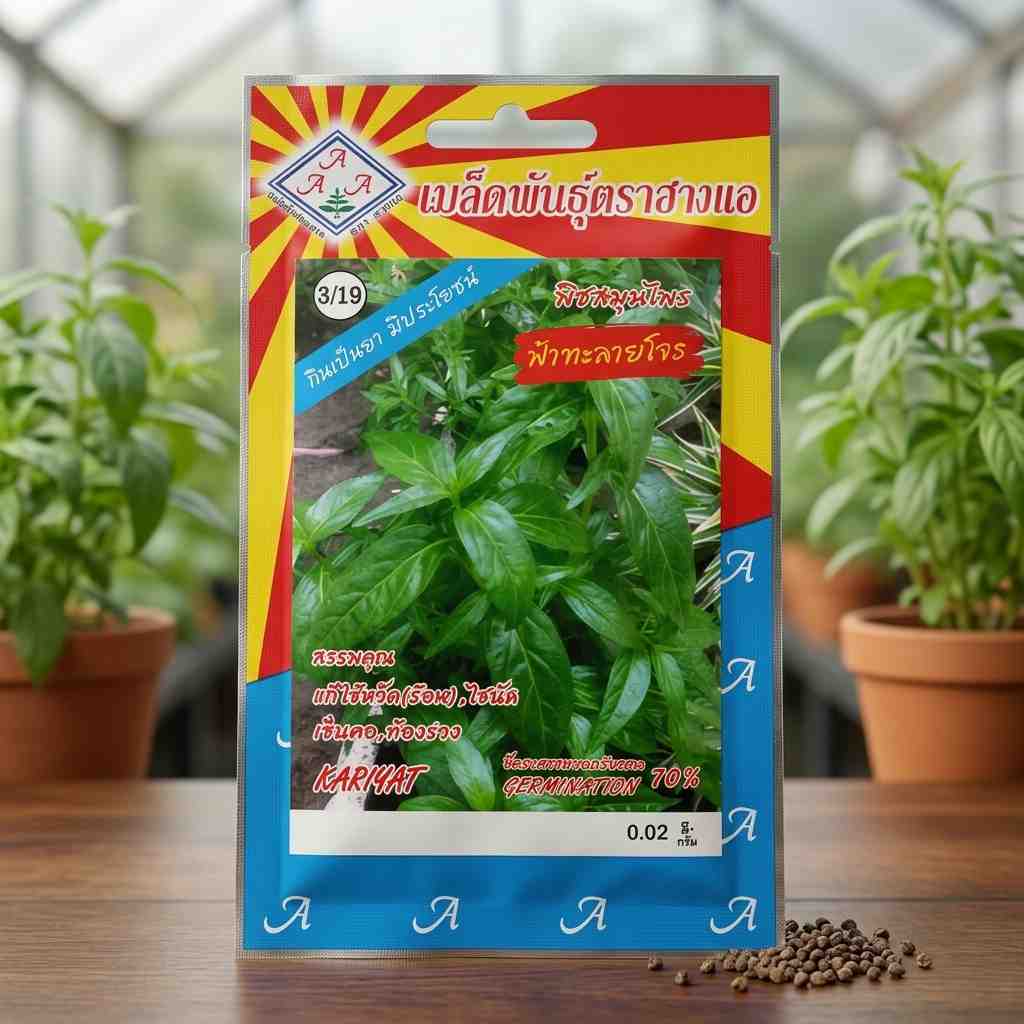
Kariyat – 0.02 gram Seeds – AAA – Thai
Original price was: ৳ 210.00.৳ 160.00Current price is: ৳ 160.00.
Available on backorder
Description
KARIYAT – Seeds
Price: 160 Taka per packet (sale price)
Quantity: 0.02 gram seeds
Brand: AAA (Chua Yong Seed Co, Ltd)
Country of origin: Thailand
Germination Rate (Approx.): 70%
Physical Purity (Min): 98%
Genetic Purity (Min): 98%
Complete Growing Guide: Kariyat (Kalmegh / King of Bitters)
The plant commonly known as Kariyat is generally identified as Andrographis paniculata, also called Kalmegh, Kalomegh, Green Chiretta, and King of Bitters. It is a bitter medicinal herb native to the Indian subcontinent, including Bangladesh.
This guide is designed for rooftop cultivation in Bangladesh, with practical recommendations for containers, organic fertilizers, pest management, harvesting, and storage.
One important distinction: Kariyat is primarily cultivated for its leaves and other above-ground medicinal plant material, not for an edible fruit. Some of its traditional medicinal uses have limited clinical evidence, and concentrated preparations can cause serious allergic reactions. Growing the plant and using it medicinally are two different matters.
Plant identification
- Scientific name: Andrographis paniculata (Burm.f.) Wall. ex Nees
- Family: Acanthaceae
- Bengali name: কালমেঘ (Kalmegh/Kalomegh)
- Other names: Kariyat, Green Chiretta, King of Bitters
- Plant type: Erect, branching annual herb.
- Native region: Indian subcontinent, including Bangladesh, India, Nepal, Sri Lanka, Assam and the western Himalayas.
The Bangladesh Medicinal Plants database describes it as a strongly bitter, erect herb, generally around 30–90 cm tall. Plants may vary in size according to cultivar, sunlight, fertility, water availability and growing conditions.
Germination and early growth
The strongest quantitative germination reference located is a 2011 research paper in Industrial Crops and Products. Researchers tested seeds at six constant temperatures between 15°C and 40°C. The highest germination was approximately 95% at 25°C, and the first and final germination counts were recorded around days 5–6 and 7–9, respectively. At 40°C, germination failed under the experimental conditions.
| Growing parameter | Recommendation for Bangladesh |
| Optimal germination temperature | 25°C |
| Practical temperature range | Approximately 20–30°C; best results may vary with seed lot |
| First emergence | 3–6 days under favourable conditions |
| Main germination period | 7–10 days |
| Allow for slower seeds | Up to 14 days |
| Seed sowing depth | 3–5 mm, approximately ⅛–¼ inch |
| Germination light | Bright indirect light or filtered light; avoid deep shade |
| Seed preparation | Sow untreated seeds shallowly; keep consistently moist, not waterlogged |
| Transplanting | When seedlings have 3–4 true leaves and are sturdy enough to handle |
The germination figures come from controlled research; the sowing depth and transplanting stage are practical horticultural recommendations rather than measurements established by that experiment.
Seed-sowing procedure
- Fill a clean seed tray or small pot with a fine, well-drained seed-starting medium.
- Place seeds on the surface and cover them with only 3–5 mm of fine medium.
- Mist gently to prevent the seeds from being displaced.
- Keep the medium evenly moist at around 25°C.
- Provide bright, filtered light and airflow.
- Transplant carefully after the seedlings develop several true leaves.
Avoid placing a seed tray on a hot rooftop surface in direct afternoon sunlight. In Bangladesh, the temperature inside a small dark container can exceed the surrounding air temperature considerably.
Plant size, spacing and support
| Parameter | Recommended value |
| Typical plant height | 12–36 inches (30–90 cm) |
| Potential height under favourable conditions | Around 24–40 inches (60–100 cm), occasionally more |
| Typical plant spread | 12–24 inches (30–60 cm) |
| Seed sowing depth | ⅛–¼ inch (3–5 mm) |
| Spacing between plants | 12–18 inches (30–45 cm) |
| Row spacing in a garden bed | 12–18 inches (30–45 cm) |
| Support or trellis | Not normally required |
| Staking | Only for unusually tall, weak or wind-exposed plants |
Field cultivation recommendations range from 30 × 15 cm to 30 × 30 cm, with some cultivation manuals using wider spacing. For individual rooftop containers, one plant per pot is the simplest approach.
Flowering, harvesting and crop duration
| Growth milestone | Expected time from sowing |
| Germination | 5–10 days |
| Transplant-ready seedlings | Approximately 30–50 days |
| Flower initiation | Often around 75–120 days |
| First useful leaf harvest | Approximately 45–70 days for light picking |
| Main medicinal-herb harvest | Commonly 90–120 days; sometimes 110–150 days depending on growing conditions |
| Seed harvest | Usually several months after sowing; allow the seed capsules to mature and turn light brown |
Commercial cultivation guidance commonly recommends harvesting near flowering, when medicinally important diterpene lactones accumulate. One manual recommends a first harvest at 90–120 days; other research describes harvests around 110–150 days, depending on planting conditions.
Best rooftop practice: Harvest a few healthy leaves once the plant is well established, but leave enough foliage for continued growth. For a main harvest intended for drying, use flowering onset as a practical guide rather than relying on a fixed calendar date.
Container size and soil requirements
Recommended pot for one plant
- Minimum: 10 × 10 inches (diameter × depth)
- Preferred: 12 × 12 inches
- Larger option: 14 × 12 inches for a bushier plant or longer harvesting period
Choose a container with several unobstructed drainage holes. Larger containers retain moisture longer, but they must not remain saturated.
For a garden bed, use at least 8–12 inches of well-drained growing medium. For commercial-style planting, maintain the spacing given above.
Ideal soil conditions
- Texture: Loose, fertile sandy loam or loam.
- Drainage: Excellent drainage, with sufficient moisture retention.
- Organic matter: Moderate to high, supplied by fully matured compost.
- pH: Aim for approximately 6.0–7.0; a slightly wider range may be tolerated.
- Avoid: Heavy, compacted clay; fresh cow dung; salty media; and waterlogged roots.
FAO’s Ecocrop profile lists medium-to-light soils and a warm growing climate as suitable. A precise optimum pH is not specified in that profile, so the pH recommendation above is a practical horticultural target rather than a verified species-specific optimum.
Sunlight and watering
Light requirements
| Stage | Light requirement |
| Germination | Bright indirect light or filtered light |
| Seedling stage | About 4–6 hours of gentle sunlight or equivalent bright light |
| Established plant | Around 4–6 hours of sunlight; more can work if the plant does not overheat or wilt |
| Dhaka rooftop in peak summer | Morning sun with light afternoon shade can reduce heat stress |
Kalmegh can grow under light shade, and a PROSEA-derived cultivation reference reports favourable performance with approximately 20% shade in a particular study. That does not mean deep shade is ideal.
Water requirement by plant size
Exact litres per plant have not been established as a universal research-based requirement for Kariyat. The following are starting estimates for a 12-inch rooftop pot, not fixed daily quotas.
| Plant stage | Approximate water per watering | Starting interval |
| Seed tray | 30–100 mL per small cell or equivalent light misting | Check daily; mist when the surface begins drying |
| Small seedling, 2–4 inches | 100–200 mL | Every 1–2 days as needed |
| Young plant, 4–10 inches | 200–400 mL | Every 1–3 days |
| Established plant, 10–24 inches | 400–800 mL | Every 1–3 days |
| Large flowering plant, 24–40 inches | 500–1,000 mL | Every 1–2 days in hot weather, less often in cool weather |
These volumes assume a reasonably moist, well-drained medium. Adjust them to the pot, wind, heat, rainfall and plant response.
The correct watering method
- Check the top 1 inch (2–3 cm) of soil.
- Water when that layer begins to dry, rather than following a rigid schedule.
- Apply water evenly until a little drains from the bottom.
- Empty any saucer that retains standing water.
- During Dhaka’s monsoon, reduce watering after rainfall and check that drainage holes are not blocked.
Small pots on exposed concrete roofs can dry very quickly. Conversely, coconut coir and compost-rich media can retain considerable water after rain.
Essential nutrients and organic sources
Kariyat requires the same major plant nutrients as other leafy herbs. There is no well-established, universal percentage formula for the nutrient composition of a healthy Kariyat plant; nutrient demand depends on plant age, soil fertility and harvest goals.
| Nutrient | General plant requirement | Organic sources from your list |
| Nitrogen (N) | High importance for leaf and shoot growth | Vermicompost, cow-dung compost, mustard cake, horn meal |
| Phosphorus (P) | Root establishment, flowering and seed development | Bone meal, vermicompost |
| Potassium (K) | Water regulation, stress tolerance and overall growth | Compost, vermicompost; quantities vary by product |
| Calcium (Ca) | Cell walls and growing tissues | Oyster shell powder, bone meal |
| Magnesium (Mg) | Chlorophyll formation | Epsom salt; composts provide variable amounts |
| Sulphur (S) | Amino acids and protein formation | Mustard cake, Epsom salt |
| Iron (Fe) | Chlorophyll-related metabolism | Compost and trace minerals in the growing medium |
| Zinc (Zn) | Enzyme activity and growth regulation | Mature compost and trace minerals |
| Manganese (Mn) | Photosynthesis and enzyme activity | Compost and soil minerals |
| Boron (B), copper (Cu), molybdenum (Mo) | Small but essential quantities | Usually supplied by a balanced medium and trace-mineral sources |
Approximate nutrient percentages in the plant’s organic inputs
These are typical broad ranges, not guaranteed specifications. Actual nutrient content varies considerably with raw materials, maturity, moisture and manufacturing.
| Fertilizer | Approximate N–P₂O₅–K₂O (%) |
| Vermicompost | 1–2% – 0.5–1.5% – 0.5–1.5% |
| Cow-dung compost | 0.5–1.5% – 0.2–0.8% – 0.5–1.5% |
| Trichocompost | Often similar to its underlying compost; product-specific |
| Horn meal | Approximately 10–14% N; low P and K |
| Bone meal | Approximately 3–5% N and 10–25% P₂O₅ |
| Neem cake | Approximately 3–5% N; variable P and K |
| Mustard cake | Approximately 4–6% N; variable P and K |
| Oyster shell powder | Predominantly calcium carbonate; little useful NPK |
| Epsom salt | Magnesium sulphate heptahydrate: about 9.5% Mg and 12.5% S |
A useful principle is to avoid treating all these materials as mandatory. A well-balanced medium with moderate organic fertility is preferable to a heavily loaded fertilizer blend.
Organic fertilizer blend and application schedule
The following is a conservative rooftop-container program. It is an adapted recommendation for one 12 × 12-inch pot, not a published Kariyat-specific fertilizer trial.
Initial organic fertilizer blend
Mix the following into the potting medium before transplanting.
| Fertilizer | Quantity per pot | Purpose |
| Trichocompost | 200 g | Compost organic matter and beneficial microbial inoculation |
| Vermicompost | 250 g | Broad nutrient supply and soil structure |
| Cow-dung compost | 150 g | Organic matter and supplementary nutrients |
| Horn meal | 10 g | Slow-release nitrogen |
| Bone meal | 10 g | Phosphorus and calcium |
| Neem cake powder | 15 g | Organic nutrients and potential soil-pest suppression |
| Mustard cake powder | 10 g | Supplementary nitrogen |
| Oyster shell powder | 5 g | Calcium and pH buffering, if needed |
| Epsom salt | 0 g initially | Add only if magnesium deficiency is suspected or confirmed |
Total added organic materials: approximately 650 g per pot, excluding Epsom salt.
These quantities assume mature, low-salt composts and a 12-inch pot containing roughly 15–20 litres of growing medium. If the pot is smaller, scale down the rates. The oyster shell is optional and should be omitted if the soil is already alkaline or calcium-rich.
Top-dressing schedule
| Time after transplanting | Fertilizer | Quantity per plant |
| At transplanting | Initial blend above | As listed |
| 30 days | Vermicompost | 30–40 g |
| 45–60 days | Trichocompost | 25–30 g |
| 60–75 days, if growth is weak | Vermicompost | 20–30 g |
| After first light leaf harvest | Vermicompost | 20–30 g, if the plant is continuing to grow |
Apply top-dressings around the outer root zone, mix lightly into the topsoil, and water afterwards. Do not pile fertilizer against the stem.
Important adjustments
- Do not routinely combine large quantities of mustard cake, horn meal and vermicompost; all can contribute nitrogen.
- Avoid using fresh or incompletely fermented mustard cake in the pot.
- Do not add Epsom salt routinely: excess magnesium can interfere with calcium and potassium uptake.
- If the plant is growing vigorously, skip optional top-dressings.
- If you intend to harvest leaves for medicinal or culinary use, only use inputs suitable for that purpose and follow the relevant product’s safety directions.
Chemical fertilizer requirements
Published cultivation recommendations include approximately 75:75:50 kg/ha of N:P₂O₅:K₂O, together with around 20 tonnes/ha of farmyard manure. Other trials have examined different NPK ratios and integrated organic inputs.
For a 12-inch pot, the field recommendation is not a reason to apply a concentrated field dose directly. With the organic blend already described, use little or no chemical fertilizer initially.
If you choose to use a balanced soluble fertilizer, a cautious starting approach is:
| Plant stage | Optional fertilizer | Conservative application |
| Seedling | None | Use a low-strength, clean seed-starting medium |
| Established plant | Balanced NPK such as 19:19:19 | 0.5 g in 1 litre of water, applied sparingly |
| Active vegetative growth | Same balanced fertilizer | Every 3–4 weeks only if needed |
| Flowering and pre-harvest | Avoid unnecessary heavy feeding | Maintain balanced moisture and nutrition |
The 0.5 g/L rate is a conservative container-gardening starting point, not a validated species-specific dose. Do not apply it to dry soil or combine it with a strong organic feed on the same day. If the compost blend produces healthy growth, chemical fertilizer may be unnecessary.
Recommended potting mix for Bangladesh’s rooftop climate
The objective is a mix that retains enough moisture during hot, windy weather while draining quickly during heavy monsoon rain.
Complete mix formula
Percentages are by volume. The remaining ingredients improve drainage and provide additional organic fertility.
| Ingredient from your list | Percentage |
| Loamy soil | 30% |
| Vermicompost | 15% |
| Coconut coir dust | 15% |
| Cow-dung compost | 10% |
| Trichocompost | 5% |
| Coconut husk, medium size | 5% |
| Perlite | 5% |
| Cinder, screened and clean | 5% |
| Wood bark, well-aged and composted | 3% |
| Neem cake powder | 2% |
| Mustard cake powder | 1% |
| Horn meal | 1% |
| Bone meal | 1% |
| Oyster shell powder | 1% |
| Wood charcoal, clean and untreated | 1% |
| Total | 100% |
The formula is a starting point for a rooftop pot, not a laboratory-verified optimum for this species. Use clean, low-salt coir, and only mature, disease-free compost and bark.
Mixing instructions
- Screen the loamy soil to remove debris and large clods.
- Blend the loamy soil, coir, composts and organic fertilizers thoroughly.
- Incorporate the porous drainage materials evenly rather than creating a thick stone layer at the bottom.
- Moisten the mix and allow it to settle for a day before planting.
- Check drainage and, if possible, pH before transplanting.
For rooftop safety, keep containers as light as practical and account for the weight of wet soil and stored rainwater.
Companion plants
Kariyat is a relatively small annual herb, so companion planting should focus on plants with similar watering needs and limited competition.
Suitable possibilities include:
- Coriander: compatible in cooler growing periods, although it may compete for space.
- Basil: can share a sunny, well-drained growing area.
- Marigold: useful as a flowering border plant and pollinator resource.
- Dill: possible in a separate nearby pot, provided it does not shade the Kariyat.
- Lemongrass: better kept in a separate container because it can become large and competitive.
For a 12-inch pot, I recommend growing just one Kariyat plant. Companion plants can be placed in adjacent containers rather than sharing the root space.
There is insufficient species-specific evidence to claim that any of these plants reliably increases Kariyat’s medicinal-compound concentration or prevents its pests and diseases.
Taste, yield and lifespan
| Question | Answer |
| Fruit taste rating | Not applicable; fruit is not the main harvested product |
| Scoville rating | Not applicable; Kariyat is not a chilli |
| Leaf taste rating | 1/10 for palatability — exceptionally bitter |
| Average lifespan | One growing season, usually several months |
| First light leaf picking | Around 45–70 days under favourable conditions |
| Main harvest | Around 90–120 days, sometimes later |
| Support requirement | Normally none |
The leaf taste rating is a subjective assessment, not a published sensory-test result. The intense bitterness is associated with compounds including andrographolide and related diterpene lactones.
Average yield per square foot
Commercial reports differ by variety, planting density, harvest timing and whether they report fresh or dry material. A research review reports an average biomass figure around 3 tonnes/ha under a particular planting arrangement, while other cultivation studies report different yields.
For context:
- 3 tonnes/ha = approximately 0.028 kg/m², or about 2.8 g/m²?
- Correctly converted, 3,000 kg/ha ÷ 10,000 m²/ha = 0.30 kg/m², equivalent to approximately 0.028 kg/ft².
That is about 28 g per square foot for the reported biomass figure. It should not be interpreted as a guaranteed rooftop yield or as dry-leaf yield.
Pests and diseases: identification and management
Kariyat is often described as a relatively hardy medicinal herb, but it can still suffer from root and stem diseases, especially in humid, poorly drained conditions. Sclerotium-associated wilt has been reported during the rainy season.
Common pests
| Pest | Signs to look for | Organic or low-risk management | Chemical options, if necessary |
| Aphids | Clusters of small insects on tender shoots; curled leaves | Water jet, remove heavily infested tips, insecticidal soap | A locally registered aphicide, such as a suitable acetamiprid product, where permitted |
| Whiteflies | Tiny white insects fly up when foliage is disturbed | Yellow sticky traps, remove infested leaves, insecticidal soap | A locally registered product containing an appropriate active ingredient such as pyriproxyfen |
| Spider mites | Fine webbing, stippling and bronzed leaves | Rinse leaf undersides, improve humidity and airflow without waterlogging | A locally registered miticide such as abamectin, if necessary |
| Thrips | Silvery scars and distorted young leaves | Remove damaged tissue, use blue sticky traps | A registered product appropriate for thrips, such as spinosad, where permitted |
| Caterpillars | Holes and missing sections of leaves | Hand-pick caterpillars and remove egg masses | Bacillus thuringiensis var. kurstaki is a biological control option |
These are general management options for common garden pests, not a claim that every pest regularly attacks Kariyat.
Important: Check the Bangladesh registration, crop label, pre-harvest interval and permitted use before applying any pesticide. If the leaves are intended for consumption, do not use a product that is not labelled for that use. Never mix pesticides casually or spray flowering plants when pollinators are active.
Common diseases
- Root rot
Symptoms: Yellowing, wilting despite moist soil, darkened roots and poor growth.
Prevention: Improve drainage, use clean pots and avoid excessive watering.
Treatment: Remove severely affected plants and replace contaminated growing medium. A fungicide may be appropriate only after diagnosis.
- Sclerotium-associated wilt or southern blight
Symptoms: Sudden wilting, basal stem decay and sometimes white fungal growth near the soil line.
Prevention: Maintain airflow, avoid persistent wetness at the stem base and discard infected plants.
Treatment: Remove infected material promptly. Trichoderma-based biological products may help suppress certain soilborne pathogens, but they are preventive or suppressive tools rather than guaranteed cures. Sclerotium disease has been reported in Kariyat cultivation.
- Fungal leaf spots
Symptoms: Brown or dark lesions, sometimes with yellow margins.
Prevention: Water at the soil level, remove diseased leaves and avoid overcrowding.
Treatment: Confirm the pathogen before selecting a fungicide; copper-based products may be registered for certain leaf-spot diseases.
- Viral or virus-like symptoms
Symptoms: Mosaic patterns, distorted growth and persistent unusual yellowing.
Prevention: Use clean planting material and control insect vectors.
Treatment: There is no general chemical cure for a plant virus. Isolate and remove confirmed infected plants.
Do not apply a fungicide simply because leaves are yellow. Overwatering, nutrient imbalance, heat stress and root damage can produce similar symptoms.
Harvest maturity and seed collection
When are the leaves ready?
Harvest healthy leaves once the plant is well established. For a main medicinal-herb harvest, the most useful field indicator is the beginning of flowering, when the flower stalks start developing. Research and cultivation guidance indicate that the concentration of andrographolide can be relatively high at this stage.
Look for:
- A well-branched plant with abundant healthy foliage.
- Flower buds or the beginnings of flower stalks.
- No substantial pest damage, fungal lesions or pesticide contamination.
Cut the aerial portion carefully if you want to encourage regrowth, leaving roughly 4–6 inches (10–15 cm) of stem. Regrowth is possible, but it is not guaranteed; the plant is normally annual.
When are seeds mature?
Seed capsules change from green to light brown as they mature. Collect mature capsules before they split and disperse their seeds. Allow them to dry in a shaded, airy location before separating the seeds. A Tamil Nadu Agricultural University manual specifically describes the change from green to light brown and notes that this occurs roughly 30 days after anthesis under its guidance.
Nutritional values
Published studies have analysed the leaves of Andrographis paniculata, but the reported values vary with location, sample preparation and laboratory method. It is not a standardized food-composition item in the way common vegetables are.
One 2012 study of fresh leaves reported approximately:
| Component | Reported value per 100 g fresh leaves |
| Moisture | 73.02 g |
| Carbohydrate | 12.16 g |
| Vitamin C | 45.01 mg |
| Phosphorus | 250.13 mg |
| Sodium | 152.50 mg |
| Calcium | 318.62 mg |
| Magnesium | 7.68 mg |
Source: Puranik et al., International Journal of Pharma and Bio Sciences (2012).
These are results from a particular study, not guaranteed nutritional values for every plant. The figures also do not establish a recommended serving size. Because the plant contains potent bitter phytochemicals, its leaves should not automatically be treated as an ordinary daily vegetable.
Potential health benefits — with evidence limitations
Kariyat has a long history of traditional medicinal use. Modern research has investigated its bioactive compounds, especially andrographolide. The following are areas of research, not claims that eating the leaves will treat or prevent disease.
- Respiratory symptom relief: Some clinical studies of standardized andrographis preparations suggest potential reductions in certain upper respiratory infection symptoms. Formulations and study quality vary.
- Anti-inflammatory activity: Laboratory and preclinical studies have investigated anti-inflammatory effects of andrographolide and related compounds. This does not prove that the plant treats inflammatory diseases in humans.
- Antioxidant activity: Studies have identified phytochemicals and antioxidant-related activity in plant extracts. The clinical significance of consuming the raw leaves is uncertain.
- Antimicrobial research: Extracts and isolated compounds have shown activity in some laboratory experiments. They should not be substituted for prescribed antibiotics or other proven treatments.
- Potential immune-related effects: Research has examined immune-modulating properties, but effects depend on the preparation and dose. A general claim that the plant “boosts immunity” is too broad.
Essential safety information
The Australian Therapeutic Goods Administration’s 2026 safety review reports continued cases of anaphylaxis associated with andrographis-containing medicines, including a reported fatal case. The NIH also notes possible adverse effects, including gastrointestinal symptoms, skin reactions and interactions with certain medicines.
- Do not use Kariyat as a home treatment for serious illness.
- Avoid medicinal use during pregnancy; seek professional advice when breastfeeding.
- People taking blood-pressure medicines, anticoagulants or immunosuppressants should seek professional advice before using medicinal preparations.
- Stop use and seek urgent medical care if a serious allergic reaction occurs.
Growing a plant is not inherently the same as taking a concentrated herbal supplement, but consumption still warrants caution.
Recipes and traditional preparations
Because Kariyat is exceptionally bitter and is not a standard culinary green, these are culinary concepts or traditional-style preparations, not clinically validated medicinal recipes. I would not recommend regular consumption without qualified advice.
- Bengali-style bitter vegetable shukto — adaptation
A traditional shukto-inspired vegetable dish can include bitter gourd, potato, raw banana, mustard and poppy-seed paste. Kariyat is not a standard ingredient in shukto, and I would not add it as an ordinary vegetable.
- Bengali bitter-leaf bhorta — not a recommended Kariyat recipe
Bengali cuisine includes bitter-leaf and vegetable bhortas. However, substituting Kariyat leaves into a routine bhorta recipe is not advisable because there is no established safe culinary serving size.
- Southeast Asian-inspired herbal broth
A fragrant broth using familiar culinary herbs such as lemongrass, ginger and basil can provide a similar herbal theme without using Kariyat as an unvalidated food ingredient.
- Herbal infusion
Kariyat is used in traditional herbal preparations, but a home-brewed tea has no standardized dose or established safe serving. Use a properly regulated preparation only after discussing its suitability with a qualified healthcare professional.
These alternatives are included to distinguish the plant’s traditional medicinal identity from ordinary food use. I would not label a Kariyat-containing recipe as safe simply because the leaves are natural or traditionally used.
Best month for sowing in Bangladesh
For a Dhaka rooftop garden, my recommendation is to start seeds in March–April or September–October, with weather-dependent adjustments. May–June is also a traditional sowing period for commercial cultivation in South Asia, but it requires extra attention to heat and monsoon drainage.
Bangladesh’s weather is highly seasonal. The Bangladesh Meteorological Department publishes monthly temperature and rainfall normals, while Japan Meteorological Agency station data provide historical observations for Bangladesh. The available records show warm conditions in the monsoon season and generally cooler, drier weather in winter.
| Month | Suitability for seed starting | Notes |
| January–February | Moderate | Cooler nights may slow germination |
| March–April | Good with protection | Warm conditions; protect trays from afternoon heat |
| May–June | Good with drainage precautions | Traditional sowing season, but heavy rain and heat can be challenging |
| July–August | Possible | Protect seedlings from prolonged rain and waterlogging |
| September–October | Good | Often a practical period as the monsoon eases |
| November–December | Moderate to low | Cooler temperatures may slow early growth |
These are gardening recommendations based on the plant’s temperature requirements and Bangladesh’s seasonal climate, not a statistical ranking of germination success from the last two years.
Practical recommendation: For a small rooftop trial in Dhaka, start a batch in late March or early April, and another in late September if you want to compare growth between seasons. Keep the germination medium close to 25°C and prevent it from overheating.
Seeds per gram
A seed-ecology study of Andrographis paniculata reported an average thousand-seed weight of approximately 1.765 g.
Estimated seed count: approximately 567 seeds per gram.
Best propagation method
- Method 1 — Seed propagation (recommended)
The conventional method for this annual species. Sow shallowly, maintain warmth and moisture, and transplant seedlings after they establish several true leaves.
- Method 2 — Stem cuttings
Cuttings have been reported as a propagation option. Use healthy, non-flowering stems and a clean, aerated rooting medium, but expect variable success.
- Method 3 — Tissue culture
Useful for specialist laboratories and large-scale propagation. It is generally unnecessary for ordinary rooftop gardening.
Seed propagation is the most practical choice for a home gardener. A review of the species’ agronomy describes seed cultivation as conventional and tissue culture as an alternative for producing large numbers of plantlets.
How to store leaves and seeds
Fresh leaves
- Harvest clean, healthy leaves.
- Remove damaged material and gently wash if necessary.
- Dry the surface moisture before refrigeration.
- Store in a clean container or breathable bag in the refrigerator.
- Use fresh leaves within approximately 2–4 days as a practical quality target.
This storage interval is a general leafy-herb recommendation, not a species-specific shelf-life trial. Fresh Kariyat material is traditionally used within a few days of collection.
Dried leaves
- Remove soil and damaged leaves.
- Dry in a shaded, well-ventilated area or in a suitable low-temperature dryer.
- Ensure the leaves are thoroughly dry before packaging.
- Store in an airtight container in a cool, dark, dry place.
- Discard material showing mould, moisture or an unusual smell.
For dried leaves, 6–12 months can be used as a conservative storage target for botanical material under suitable conditions, but potency and chemical composition may change over time. This is not a validated shelf life for medicinal efficacy.
Seeds
- Dry mature capsules before extracting seeds.
- Store clean, dry seeds in a labelled airtight container.
- Keep them away from heat, moisture and direct sunlight.
- Record the harvest date and test germination before sowing an older batch.
The exact seed viability period depends on seed maturity, initial moisture and storage conditions. Do not assume a fixed expiry date without germination testing.
Specialties
- Exceptionally bitter foliage: Its strong bitterness is a defining characteristic and is associated with its diterpene lactones, including andrographolide.
- A useful medicinal-botany teaching plant: It is an annual herb that can be raised from seed and observed through germination, branching, flowering and seed formation in one growing season.
- Distinctive seed-dispersal mechanism: Its mature capsules can split and release seeds. The seed ecology literature describes a small hook-like structure associated with ballistic seed dispersal.
Fun Quotes
“The smallest medicinal herb can teach us the greatest lesson: nature deserves both curiosity and respect.”
“In the garden, even the bitterest leaf has a story of growth, resilience and renewal.”
Few Facts
- The species has a documented scientific history. The currently accepted botanical name is Andrographis paniculata (Burm.f.) Wall. ex Nees, published in 1832.
- Flowering time matters to medicinal-herb production. Harvest timing can influence biomass and andrographolide content, which is why cultivation manuals often recommend harvesting near flowering rather than at an arbitrary plant age.
- It has a broad regional history. The plant is native to parts of the Indian subcontinent and has also been widely used in traditional medical systems across Asia.
Origin story and botanical discovery
Kariyat is not a modern hybrid with a single breeder or company responsible for its creation. It is a naturally occurring plant species native to the Indian subcontinent.
The accepted botanical name, Andrographis paniculata (Burm.f.) Wall. ex Nees, reflects its botanical naming history. Kew’s Plants of the World Online recognises this name and records its publication in N.Wallich, Plantae Asiaticae Rariores, volume 3, page 116, in 1832.
The plant’s traditional uses predate modern clinical research. Contemporary investigations focus on its chemical constituents, cultivation, and potential biological activity. Its traditional reputation should not be confused with proof that every claimed health benefit is effective in humans.
Info Reference:
The following links are the main sources used in this guide. The most important evidence for germination, cultivation and safety is listed first.
Botanical identity and Bangladesh references
- Kew Science — Plants of the World Online: Andrographis paniculata.
- Medicinal Plants of Bangladesh — Kalomegh.
- Nirjas — Kalmegh botanical information in Bengali.
- FAO Ecocrop — Species ecology and growing conditions.
Germination, propagation and agronomy
- Effect of temperature on seed germination parameters in Kalmegh — Industrial Crops and Products, 2011.
- Andrographis paniculata: A Review of Ethnobotany, Phytochemistry, and Pharmacology.
- Practical Manual — Medicinal and Aromatic Crops, RLBCAU.
- ICFRE — Cultivation of Selected Non-Wood Forest Products.
- Good Agricultural Practice — Kalmegh.
- Kisaan Helpline — Kalmegh cultivation overview.
- Integrated nutrient management and yield of Kalmegh — Journal of Pharmacognosy and Phytochemistry, 2018.
- Bioformulation-mediated response of Kalmegh for growth, yield and quality.
- Effect of transplanting and harvesting dates on morphology and andrographolide content — ICAR journal.
- PROSEA — Harvesting, yield and handling of Andrographis paniculata.
- Pl@ntUse — PROSEA-derived cultivation and disease information.
- Plant density, harvest timing and medicinal-compound accumulation under controlled conditions.
- Studies in seed ecology and seedling phenology of Andrographis paniculata.
- Research on harvesting mature Kariyat seed capsules for propagation.
- Research on nutrient uptake and fertilizer formulation for Andrographis paniculata.
Nutrition, phytochemistry and health safety
- Nutritional evaluation of Andrographis paniculata leaves — International Journal of Pharma and Bio Sciences, 2012.
- Nutritional quality and phytochemical analysis of leaves and stems.
- Evaluation of phytochemical and elemental composition of Andrographis paniculata leaves, 2024.
- US NIH Office of Dietary Supplements — Immune Function and Andrographis.
- Memorial Sloan Kettering Cancer Center — Andrographis evidence and clinical safety.
- Safety of Andrographis paniculata: Systematic review and meta-analysis.
- Australian TGA — Updated anaphylaxis safety review, 2026.
Bangladesh climate references
- Bangladesh Meteorological Department — Climate data and monthly normals.
- Japan Meteorological Agency — Cox’s Bazar historical climate data.
- Japan Meteorological Agency — Bogura historical climate data.
Final recommendation: For rooftop cultivation in Dhaka, start with one plant in a 12-inch pot, use the well-drained potting mix above, keep the medium evenly moist without waterlogging, and avoid excessive fertilizer. Treat Kariyat primarily as a medicinal-botany plant rather than an everyday edible green.
*Note: It is recommended to prepare seedling in a small cup or pot for better success rate and keep the soil moist.
Accessories Required For Seedling Preparation:
OR
Seed Germination Disclaimer:
Successful germination depends on several factors, including temperature, growing medium, moisture, watering, sunlight, soil pH, sowing depth, seed age, and local weather conditions. Germination results may therefore vary depending on the growing environment and cultivation method.
Before reporting a seed as defective, please ensure that the recommended growing conditions and proper sowing methods have been followed. You may also search Google or YouTube for crop-specific seed-sowing guides and tutorials, e.g. “How to grow Bird Chili from seeds.”
For any product-related questions, please contact our support team by inbox, email, or phone. We will do our best to assist you.
Please read the product description carefully before sowing.
Seed Quantity: In rare cases, there may be a slight variation in the number of seeds inside a packet due to packaging or handling. If you notice a significant shortage, please inform us immediately with relevant photos. Our support team will review the matter and provide a solution where possible.
বীজের জার্মিনেশন সংক্রান্ত তথ্য:
বীজের সফল জার্মিনেশন তাপমাত্রা, রোপণ মিডিয়া, আর্দ্রতা, পানি, সূর্যালোক, মাটির pH, বীজ বপনের গভীরতা, বীজের বয়স এবং স্থানীয় আবহাওয়াসহ বিভিন্ন বিষয়ের উপর নির্ভর করে। তাই পরিবেশ ও চাষের পদ্ধতি অনুযায়ী জার্মিনেশনের ফলাফল ভিন্ন হতে পারে।
বীজের মান নিয়ে অভিযোগ করার আগে অনুগ্রহ করে সঠিক পরিবেশ ও বীজ বপনের পদ্ধতি নিশ্চিত করুন। প্রয়োজনীয় নির্দেশনার জন্য Google বা YouTube-এ ফসলের নাম দিয়ে সার্চ করতে পারেন, যেমন: “How to grow Bird Chili from seeds.”
পণ্য সম্পর্কিত কোনো প্রশ্ন থাকলে ইনবক্স, ইমেইল অথবা ফোনের মাধ্যমে আমাদের সাপোর্ট টিমের সাথে যোগাযোগ করুন। আমরা যথাসাধ্য সহযোগিতা করার চেষ্টা করব।
বীজ ব্যবহারের আগে অনুগ্রহ করে পণ্যের বিবরণ ভালোভাবে পড়ে নিন।
বীজের পরিমাণ: বিরল ক্ষেত্রে প্যাকেজিং বা হ্যান্ডলিংয়ের কারণে প্যাকেটে উল্লেখিত সংখ্যার তুলনায় সামান্য কম-বেশি হতে পারে। উল্লেখযোগ্য ঘাটতি থাকলে অনুগ্রহ করে দ্রুত ছবি সহ আমাদের জানান। আমাদের সাপোর্ট টিম বিষয়টি পর্যালোচনা করে সম্ভব হলে উপযুক্ত সমাধান প্রদান করবে।
#thai #AAA #seeds #Color #Plant #Rooftop #seed #seeds #Balcony #online #store #company #supplies #shop #my #garden #bd #nature #ছাদ #বেগুন #বাগান #টব #গাছ # ফুল #বীজ #near #me #in #Dhaka #Bangladesh
#Kariyat #Kalmegh #Kalomegh #AndrographisPaniculata #KingOfBitters #GreenChiretta #MedicinalPlant #MedicinalHerb #HerbalPlant #HerbGarden #HerbalGardening #MedicinalGarden #HomeGardening #RooftopGardening #ContainerGardening #UrbanGardening #OrganicGardening #OrganicGrowing #GardeningBangladesh #BangladeshGardening #DhakaGardening #RooftopGarden #GardenPlants #HerbPropagation #SeedGermination #PlantPropagation #SeedStarting #PlantCare #PlantScience #BotanicalGarden #Botany #PlantResearch #PlantEducation #SustainableGardening #OrganicSoil #PottingMix #SoilHealth #Composting #Vermicompost #Trichocompost #OrganicFertilizer #PlantNutrition #GardenTips #GardeningTips #TropicalGardening #TropicalPlants #SouthAsianPlants #BangladeshPlants #MedicinalBotany #HerbalResearch #PlantBiodiversity #Andrographolide #KalmeghPlant #GreenHerbs #SeedToPlant #GardenLearning #MyGardenBd
#কালমেঘ #কালোমেঘ #করিয়াত #ঔষধিগাছ #ঔষধি_উদ্ভিদ #ভেষজউদ্ভিদ #ভেষজগাছ #ভেষজবাগান #ঔষধি_বাগান #ছাদবাগান #ছাদবাগানবাংলাদেশ #বাংলাদেশেরগাছ #বাংলাদেশেরউদ্ভিদ #বাগান #বাগানকরুন #বাগানপ্রেমী #বাগানপরিচর্যা #বাগানবিষয়কতথ্য #গাছেরযত্ন #গাছেরচারা #বীজথেকেগাছ #বীজবপন #বীজঅঙ্কুরোদগম #টবেরগাছ #টবেবাগান #জৈববাগান #জৈবসার #ভার্মিকম্পোস্ট #ট্রাইকোকম্পোস্ট #কম্পোস্ট #মাটিরযত্ন #মাটিরউর্বরতা #গাছেরপুষ্টি #গাছেরবৃদ্ধি #প্রাকৃতিকচাষাবাদ #ছাদকৃষি #শহুরেবাগান #উদ্ভিদবিজ্ঞান #উদ্ভিদপরিচিতি #গাছসম্পর্কিততথ্য #বাংলাদেশেরঔষধিগাছ #ভেষজউদ্ভিদচাষ #বাগানশিক্ষা #বাগানটিপস #মাইগার্ডেনবিডি #MyGardenBd
Only logged in customers who have purchased this product may leave a review.


Reviews
There are no reviews yet.